Three days is the sweet spot for Bratislava. Enough time to see everything worth seeing, slow down over a cheap beer in the Old Town, take a day trip, and still feel like you’ve barely scratched the surface.
I spent months in Bratislava during my Erasmus year, and I’ve returned several times since. What follows is the itinerary I’d give to any friend visiting for the first time — honest, practical, and packed with the kind of detail that only comes from actually being there.
Before You Go: Quick Facts About Bratislava
- Country: Slovakia
- Currency: Euro (€)
- Language: Slovak (English widely spoken in center)
- Getting there: 1 hour by train from Vienna, 2.5 hours from Budapest
- Best time to visit: April–June and September–October
- Average daily budget: €40–70 (including accommodation, food, and activities)
Day 1: The Old Town, the Castle, and Your First Slovak Beer
Your first day in Bratislava should be spent entirely in the historic center. Everything is walkable, the streets are beautiful, and the best way to fall in love with this city is to simply wander without a fixed plan.
Morning: Bratislava Castle and Old Town
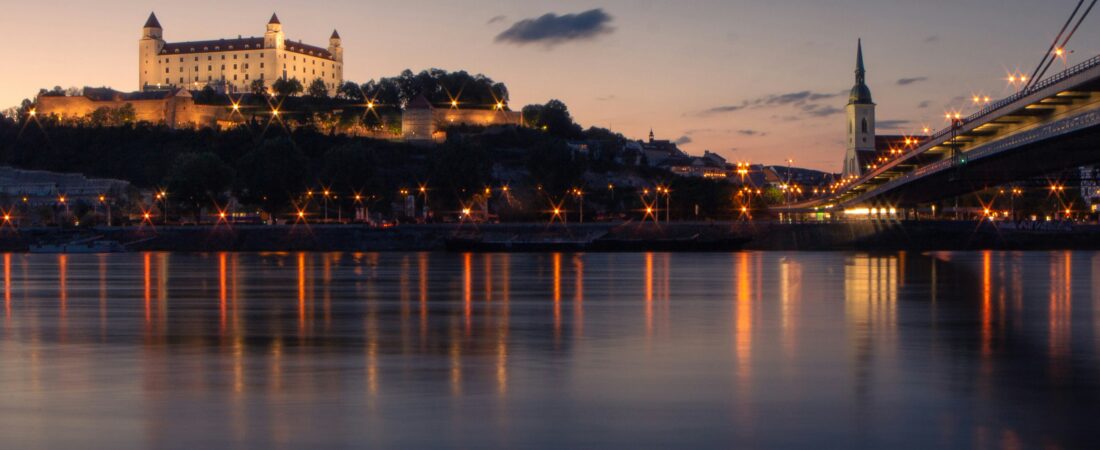
Start early — before the tour groups arrive — and head straight to Bratislava Castle. The 20-minute walk up the hill is worth every step. From the castle grounds you get the best panoramic view in the city: the Danube stretching in both directions, the red rooftops of the Old Town below, and on a clear day, Austria visible across the river.
The castle exterior and grounds are free. If you want to visit the Historical Museum inside, entry costs €12 — it’s well done but not essential on a first visit. Give yourself about an hour here, then walk back down into the Old Town.
Where to have breakfast: Before or after the castle, stop at Urban House on Uršulínska street — a hip, cozy café that serves great coffee and breakfast. It’s a local favorite, not a tourist trap.
Mid-Morning: Wander the Old Town
The Old Town (Staré Mesto) is small enough to walk end to end in 15 minutes, but you should take at least two hours. There’s no fixed route — just wander. Some highlights to look for:
- Michael’s Gate (Michalská brána) — the only surviving medieval gate of the original city walls, dating to the 14th century. Climb the 51-meter tower for €6 for rooftop views. The entrance is a heavy wooden door to the right of the archway — easy to miss.
- Main Square (Hlavné námestie) — the heart of the Old Town, lined with Baroque palaces and outdoor cafés. Look for the Roland Fountain in the center.
- Čumil the Man at Work — the beloved bronze statue of a man peeking out of a manhole on Laurinská Street. Find him and take the obligatory photo.
- The Blue Church (Modrý Kostolík) — a 10-minute walk from the center, this Art Nouveau church painted entirely in powder blue is one of the most beautiful buildings you’ll see in Central Europe. Free to visit from outside.
Afternoon: St. Martin’s Cathedral and the Danube
From the Old Town, walk to St. Martin’s Cathedral, a Gothic masterpiece where Hungarian kings were crowned for 300 years. The interior is calm and impressive — entry is free outside of service times.
Afterwards, walk down to the Danube promenade and follow it east. This stretch of waterfront is where locals come to walk, cycle, and sit with a coffee. In summer there’s a sandy beach right in the city center — grab a local beer from a nearby shop and join the locals.
Lunch recommendation: Head to any restaurant offering a denné menu (daily lunch menu) — a soup and main course for €5–8. This is how locals eat, and the quality is consistently good. Look for the signs in restaurant windows.
Evening: The UFO Bridge at Sunset
Before dinner, take a trip up the UFO Observation Deck on the SNP Bridge. The elevator takes you 85 meters above the Danube in seconds, and the views at sunset are extraordinary — the entire city laid out below, the castle glowing in the distance.
Entry costs €10–12, but if you eat or drink at the rooftop restaurant, the admission is deducted from your bill. A cocktail up there as the sun sets is one of Bratislava’s great experiences.
Dinner: Head back to the Old Town and try Bryndzové Halušky — potato dumplings with Slovak sheep cheese and bacon. It’s the national dish and every traditional Slovak restaurant serves it. Budget around €8–10 for a main.
Night: Old Town Bars
Bratislava’s nightlife is centered around Michalská, Obchodná, and Ventúrska streets. A half-liter of local draft beer costs €2–3, which makes a night out extremely affordable. Start with a walk through these streets and duck into whichever bar looks most appealing. The city has a great mix of traditional Slovak pubs, craft beer bars, and livelier clubs.
Day 2: Devín Castle, Communist History, and Local Culture
Day two takes you out of the Old Town and into the less-visited — and more fascinating — sides of Bratislava.
Morning: Devín Castle Day Trip
Take Bus #29 from the Most SNP bus stop (just beside the UFO Bridge) to Devín Castle, about 12 km from the city center. The journey takes around 30 minutes and costs less than €1.
Devín Castle sits on a dramatic cliff at the exact point where the Danube and Morava rivers meet — the border between Slovakia and Austria. The ruins date back over a thousand years, and during the Cold War this spot was part of the Iron Curtain. The views from the cliff are spectacular in any weather.
Allow 2 hours here. Entry costs around €5. Bring comfortable shoes — the terrain is uneven.
Tip: Check the bus schedule before you go, as services are less frequent on weekends.
Afternoon: The Communist Tour
This is the most unique experience in Bratislava and the one most tourists miss entirely.
Book the retro communist tour — a 2–3 hour drive through the city in a vintage Czechoslovakian Škoda car with a local guide. You’ll visit the Slavín Soviet War Memorial, Cold War bunkers, the Petržalka housing estate (one of the largest socialist housing projects ever built in Europe), the former Iron Curtain border zone, and more.
The guides often share personal family stories from the communist era. It costs around €25–40 per person depending on the operator, and it’s worth every cent.
Lunch: On your way back from Devín or before the communist tour, try Stará Tržnica (the Old Market Hall) — a historic market that transforms into a lively food and drink hub on weekends, with local craft beers and Slovak street food.
Afternoon/Evening: Slavín Memorial and the Nedbalka Gallery
If you didn’t include the Slavín Memorial in the communist tour, walk up to it independently. The 52-meter Soviet war monument sits on a hill north of the Old Town and offers one of the best views of the entire city — and is almost always quiet.
For culture, the Nedbalka Gallery on Nedbalova Street is a hidden gem. It’s a beautifully designed cylindrical building focused on Slovak art from the 19th century to the present. Entry is around €5 and you’ll rarely find it crowded.
Evening: Wine Tasting
Slovakia has a surprisingly excellent wine culture that almost nobody outside the country knows about. The Little Carpathian wine region begins just outside Bratislava, producing great white wines including Welschriesling and Grüner Veltliner.
Several cellar bars in the Old Town offer wine tasting sessions — look for options around Ventúrska Street. Alternatively, book a Bratislava Wine Tasting Tour in advance through Civitatis or Viator for a guided experience with a local expert.
Day 3: Day Trip to Vienna (or Slow Morning + Departure)
With three days in Bratislava, your third day gives you two great options depending on your travel style.
Option A: Day Trip to Vienna
Vienna is just 60 minutes away by train, making it the most popular day trip from Bratislava. Take an early train (from around €10–15 each way, book on Omio or Rail Europe in advance) and spend the day in the Austrian capital.
What to do in Vienna in a day:
- Walk the Ringstrasse and admire the Opera House, Parliament, and Kunsthistorisches Museum
- Visit Schönbrunn Palace and its gardens (allow 2 hours)
- Walk through the 1st district — Stephansplatz, Graben, and the Naschmarkt
- Have a proper Wiener Schnitzel for lunch
- If time allows, visit the Belvedere Palace to see Klimt’s famous painting The Kiss
Take a late afternoon train back to Bratislava in time for a farewell dinner.
Alternative: Take the scenic Twin City Liner catamaran along the Danube (75 minutes each way, ~€35 one way). More expensive but a beautiful journey.
Option B: Slow Morning and Last Exploration
If you prefer a more relaxed final day, use the morning to revisit your favorite spots, do any last-minute souvenir shopping on Michalská Street, or catch the free walking tour of the Old Town (tips-based, starts daily at 2pm from the Main Square — look for the guide named Sebastian if he’s still running it, genuinely one of the best).
Bratislava Card: If you’re planning to visit several paid attractions, the Bratislava Card (€19–25 for 24–72 hours) gives you free or discounted access to many museums, free public transport, and discounts on tours. Calculate whether it makes sense for your specific plans.
Where to Stay in Bratislava
Budget (hostels, €15–25/night)
- Safestay Bratislava — best hostel in the city, great location and social atmosphere
- Wild Elephants Hostel — popular with backpackers, eco-friendly approach
- Folks Hostel — central and well-reviewed
Mid-range (€60–100/night)
- APLEND City Hotel Perugia — literally steps from the Main Square, excellent on-site Slovak restaurant
- LOFT Hotel Bratislava — stylish rooms, craft beer bar on-site
Splurge (€150+/night)
- Grand Hotel River Park — luxury riverside hotel with spa, stunning Danube views, and excellent restaurant
- Marrol’s Boutique Hotel — elegant boutique option 5 minutes from Old Town, feels more like a private residence than a hotel
Getting Around Bratislava
The Old Town is entirely walkable. For attractions outside the center:
- Public transport (trams and buses) is efficient and cheap. A single ticket costs €0.90, a 24-hour pass €3.50. Buy tickets at machines or via the Imhd app.
- Bolt and Uber both operate in Bratislava and are inexpensive for short journeys.
- HOPIN is the local taxi app recommended by locals — reliable and transparent pricing.
Bratislava 3-Day Itinerary: Quick Summary
Day 1: Bratislava Castle → Old Town → Michael’s Gate → Blue Church → Danube Promenade → UFO Bridge at sunset → Old Town dinner and bars
Day 2: Devín Castle → Communist Tour → Slavín Memorial → Nedbalka Gallery → Wine tasting evening
Day 3: Day trip to Vienna (or relaxed morning, free walking tour, farewell dinner)
Budget Breakdown for 3 Days in Bratislava
| Category | Budget (€) | Mid-range (€) |
|---|---|---|
| Accommodation (3 nights) | 45–75 | 180–300 |
| Food and drink | 45–60 | 90–120 |
| Activities and entrance fees | 30–50 | 50–80 |
| Transport (local) | 10–15 | 20–30 |
| Day trip to Vienna (train) | 20–30 | 30–50 |
| Total | €150–230 | €370–580 |
Bratislava is one of the most affordable euro-zone capitals in Europe. Even on a mid-range budget, three days here costs significantly less than the same trip to Vienna, Prague, or Budapest.
Final Tips for Your Bratislava Trip
- Book the communist tour in advance — it fills up, especially in summer
- Carry some cash — many smaller restaurants and bars are cash-only
- Tap water is safe and free everywhere — bring a reusable bottle
- Don’t dismiss Petržalka — crossing the SNP Bridge into this Soviet-era housing district gives you a fascinating contrast with the Old Town
- Learn a few words of Slovak — Ďakujem (thank you) and Prosím (please) go a long way
- Best photo spot: The riverbank opposite the Old Town at dusk, looking back at the castle lit up above the Danube
Ready to plan your trip? Check out our complete guide to the best things to do in Bratislava for even more ideas and tips.
You might also like:
- Budapest vs Bratislava: Which City Should You Visit First?
- The Perfect 7-Day Central Europe Itinerary (Vienna, Bratislava, Budapest)
- 10 Most Underrated Cities in Europe Worth Visiting in 2025