Vienna is a city that makes you feel slightly more cultured just by being in it. Three days is exactly the right amount of time: enough to see the imperial highlights, linger over a Sachertorte in a legendary coffee house, catch a classical concert, and still have an afternoon to simply wander without an agenda.
This itinerary is built for first-time visitors who want to do Vienna properly — not rushed, not exhausting, but thorough. It covers the essential sights, the best food and drink, and the kind of practical details that actually make a difference on the ground.
Before You Arrive: Quick Planning Notes
- Currency: Euro (€)
- Language: German, but English is widely spoken throughout the center
- Getting around: Trams, metro (U-Bahn), and walking. A 24-hour pass costs €8, 72 hours €17.10. Download the WienMobil app.
- Tap water: Excellent and free everywhere — bring a reusable bottle
- Best area to stay: 1st district (Innere Stadt) for maximum convenience, or the 6th/7th district for better value and a more local feel
- Book in advance: Schönbrunn Palace tours, the Spanish Riding School, and evening opera or concert tickets sell out — book before you arrive
Day 1: The Imperial Center — Hofburg, Stephansdom, and the Ringstrasse
Start your first day in the heart of Habsburg Vienna, where almost everything is within walking distance.
Morning: Free Walking Tour
Begin with a free walking tour of the historic center (tip-based, starts daily from Albertinaplatz at 10am). Vienna’s history is dense and layered — Romans, Habsburgs, Napoleon, Hitler, the Soviet occupation — and a good local guide will bring it to life in a way that makes everything you see afterwards make more sense.
The tour typically covers St. Stephen’s Cathedral, the Hofburg, the Ringstrasse, and the main squares. Allow 2.5 hours and tip generously.
Late Morning: St. Stephen’s Cathedral
After the tour, return to Stephansdom at your own pace. Vienna’s great Gothic cathedral has stood on Stephansplatz since the 12th century — its multicolored tiled roof is one of the most recognizable images in Austria.
The main interior is free. For €5, climb the 343 steps of the South Tower for panoramic views over the city. The catacombs (€6) are worth it if you enjoy the macabre — Habsburg body parts are stored separately from the rest of the remains, in a tradition that dates back centuries.
Lunch: Walk to the Naschmarkt — Vienna’s famous open-air market running nearly two kilometers along the Linke Wienzeile. Graze your way through: Austrian cheese, olives, falafel, fresh fish, and excellent coffee. On Saturdays a large flea market runs alongside it. Budget €10–15 for food.
Afternoon: The Hofburg Palace
Dedicate your afternoon to the Hofburg — the vast palace complex that was the center of Habsburg power for over 600 years. You don’t need to see everything; the highlights are:
- The Sisi Museum and Imperial Apartments (~€16): The private rooms of Emperor Franz Joseph and his wife Empress Elisabeth (“Sisi”) — Austria’s tragic, beloved royal whose life reads like a 19th-century tabloid. The exhibition is brilliantly done.
- The Imperial Silver Collection: 7,000 pieces of imperial tableware — overwhelming but extraordinary.
- The Spanish Riding School: If you booked tickets in advance, the performances of the Lipizzaner horses are one of Vienna’s genuinely unique experiences. Morning training sessions are cheaper and available more easily.
After the Hofburg, walk along the Ringstrasse — the grand circular boulevard built in the 1850s. The sequence of neo-Renaissance, neo-Gothic, and neo-Greek buildings is extraordinary: the State Opera, Parliament, City Hall, the twin domed museums. Take Tram 1 or 2 if your feet need a rest.
Evening: Coffee House and Classical Concert
End your first day with the two most Viennese experiences possible.
Coffee house: Café Central on Herrengasse is the most famous — a stunning neo-Gothic space where Sigmund Freud, Leon Trotsky, and countless literary figures once sat. Order a Melange (Vienna’s classic coffee, similar to a cappuccino) and a slice of apple strudel. Book a table online on weekends.
Classical concert: Several venues offer evening concerts of Mozart and Strauss for around €35–50. The concert at St. Stephen’s Cathedral on Friday and weekend evenings is particularly atmospheric — hearing Mozart performed in a 12th-century Gothic church by candlelight is something you won’t forget.
Alternatively, if you planned ahead, standing room tickets at the Vienna State Opera are available from €3–10, sold 80 minutes before the show. It’s one of the great bargains in European culture.
Day 2: Palaces, Art, and the Prater
Day two takes you to Vienna’s finest palaces and its most beloved park.
Morning: Schönbrunn Palace
Take the U4 metro to Schönbrunn station and arrive early — before the crowds. Schönbrunn Palace is Austria’s most visited attraction, and for good reason: a magnificent Baroque complex with 1,441 rooms, sprawling formal gardens covering over 500 acres, and a hilltop triumphal arch called the Gloriette with panoramic views over the entire city.
Book tickets online in advance. The Imperial Tour (22 rooms, ~€18) is sufficient for most visitors. Allow at least half a day.
Insider tip: The gardens are free to enter before the ticket office opens. Walk up to the Gloriette early for the best views and photographs without crowds.
Also on the grounds: the Tiergarten Schönbrunn — the oldest zoo in the world, founded in 1752. Worth it if you’re traveling with kids or have extra time.
Lunch: Head back toward the center and stop at the MuseumsQuartier — a vast cultural complex housed in the former imperial stables, now containing over 60 cultural institutions. The outdoor courtyards are excellent for a casual lunch, and the complex has several good restaurants and cafés.
Afternoon: The Belvedere and Klimt’s The Kiss
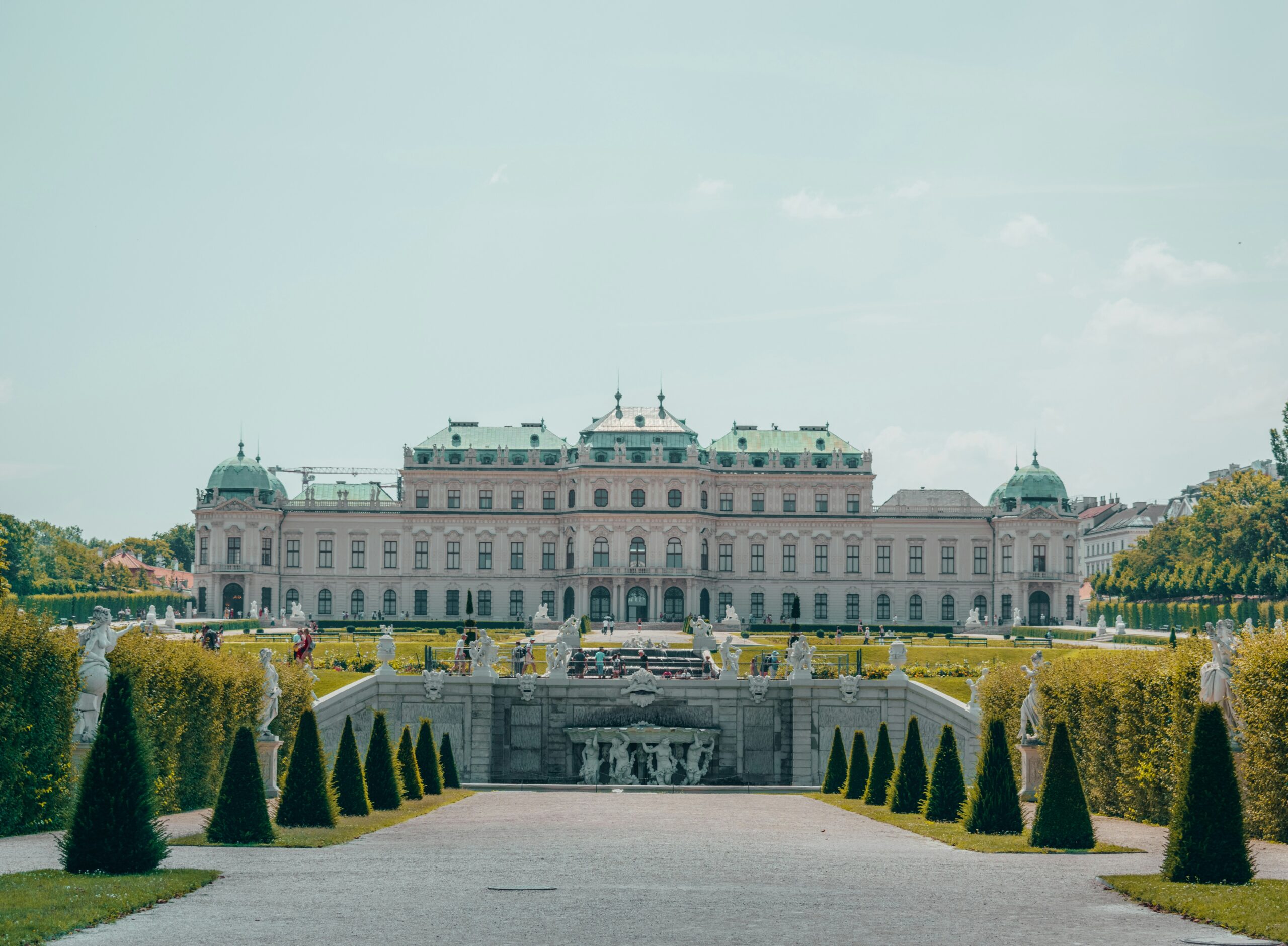
Take a short tram ride to the Belvedere Palace complex — two Baroque palaces built for Prince Eugene of Savoy in the early 18th century, connected by magnificent formal gardens.
The Upper Belvedere houses the most important collection of Austrian art in the world. The centerpiece is Gustav Klimt’s The Kiss — arguably the most famous painting in Austria, a shimmering gold-leaf masterpiece that’s even more extraordinary in person than in reproduction.
Allow 2 hours for the Upper Belvedere. Entry costs around €16. The gardens between the two palaces are free and beautiful for a walk.
The Lower Belvedere and the Orangery house temporary exhibitions — check what’s on before your visit.
Evening: The Prater and a Heuriger Wine Tavern
Take the U2 metro to Praterstern and spend an early evening in the Prater — Vienna’s beloved park, once the Habsburg hunting ground, now a vast green space of forests, meadows, and cycling paths.
The Riesenrad (Giant Ferris Wheel, 1897) at the edge of the Würstelprater amusement park is a Vienna icon — a slow, nostalgic revolution above the city in a wooden gondola for €13. Go at dusk.
For dinner, consider heading to the 19th district for a Heuriger (wine tavern) experience — sit in a courtyard under chestnut trees, drink local Grüner Veltliner wine poured from the barrel, and eat cold platters of Austrian food. Take the U4 to Heiligenstadt and follow the signs. Look for a pine branch hung above the door.
Day 3: Museums, Neighborhoods, and a Day Trip
Your final day offers a choice between going deeper into Vienna’s cultural riches or heading out to one of the excellent nearby destinations.
Morning: Kunsthistorisches Museum
The Kunsthistorisches Museum (Museum of Art History) is one of the great art museums of the world — on par with the Louvre, and far less crowded. The building alone justifies the visit: a vast domed neo-Renaissance palace facing its twin across Maria-Theresien-Platz.
Inside: Vermeer, Rembrandt, Raphael, Velázquez, Caravaggio, and the world’s largest collection of Bruegel paintings. The Egyptian and Greek antiquities are also superb.
Entry around €21. Give yourself at least 3 hours. Have a coffee in the magnificent café under the central dome — it’s one of the most beautiful rooms in Vienna.
Alternative: If you’ve had enough museums, the Albertina (graphic art collection, Monet to Picasso) or the Leopold Museum (Egon Schiele, Klimt) are excellent alternatives in the MuseumsQuartier.
Afternoon Option A: Day Trip to Bratislava
Bratislava is just 60 minutes by train from Vienna Hauptbahnhof (from €10 each way, book on Omio or Rail Europe). It’s one of the easiest and most rewarding day trips in Central Europe — a completely different city just an hour away.
In half a day you can walk the Old Town, climb up to Bratislava Castle for views over the Danube, have a cheap lunch (beer for €2, a full meal for €7), and be back in Vienna for dinner. The contrast with Vienna is part of what makes it so interesting.
Alternatively, take the scenic Twin City Liner catamaran along the Danube (~€35 one way, 75 minutes) — a beautiful journey between the two cities.
Afternoon Option B: Explore Vienna’s Neighborhoods
If you prefer to stay in the city, use your final afternoon to explore the districts that most tourists never reach:
Spittelberg (7th district): A beautifully preserved Biedermeier neighborhood with cobblestone streets, wine bars, artisan shops, and excellent cafés. Magical during the Christmas market season.
Leopoldstadt (2nd district): Vienna’s historic Jewish quarter, now one of the city’s most vibrant and creative neighborhoods. Cross the Danube Canal from the center.
Neubau (7th district): Vienna’s independent shopping and café district — vinyl record stores, bookshops, design studios, excellent coffee.
Evening: Farewell Dinner
End your three days in Vienna with a proper Austrian dinner. The classic dish is Wiener Schnitzel — a thin, breadcrumbed veal or pork cutlet, pan-fried in clarified butter, served with potato salad and a lemon wedge. It should be the size of the plate. If it isn’t, you’re in the wrong restaurant.
Restaurant Figlmüller (two locations near Stephansplatz) is the most famous schnitzel restaurant in Vienna — book in advance, the queues are legendary.
For something more local and less touristy, look for traditional Gasthaus restaurants in the 6th or 7th district.
3-Day Vienna Itinerary: Quick Summary
Day 1 — Imperial Center: Free walking tour → Stephansdom → Naschmarkt lunch → Hofburg Palace → Ringstrasse → Café Central → Classical concert
Day 2 — Palaces and Parks: Schönbrunn Palace → MuseumsQuartier lunch → Belvedere and The Kiss → Prater and Riesenrad → Heuriger wine tavern
Day 3 — Culture and Exploration: Kunsthistorisches Museum → Day trip to Bratislava (or neighborhood exploration) → Farewell Wiener Schnitzel dinner
Budget Breakdown for 3 Days in Vienna
| Category | Budget (€) | Mid-range (€) |
|---|---|---|
| Accommodation (3 nights) | 90–120 | 240–420 |
| Food and drink | 60–80 | 100–150 |
| Activities and entrance fees | 50–70 | 80–110 |
| Transport (local + day trip) | 25–35 | 35–50 |
| Concert or opera | 10–20 | 35–60 |
| Total | €235–325 | €490–790 |
Vienna is more expensive than Bratislava or Budapest, but reasonable by Western European standards. With smart planning — free walking tours, standing room opera tickets, coffee house culture rather than fancy restaurants — you can experience everything the city offers without breaking the bank.
Practical Tips
- Vienna Card / Vienna Pass: The Vienna Pass (from ~€77 for 1 day) covers entry to over 90 attractions. Worth calculating against your specific itinerary — if you’re doing 4+ paid museums, it pays for itself.
- Tipping: Round up to the nearest euro or add 10% in restaurants. Hand the tip directly to the server rather than leaving it on the table.
- Sundays: Many shops are closed. Museums and attractions are open; use Sunday for sightseeing rather than shopping.
- Standing room at the Opera: Queue at the Stehplatz entrance on the side of the building, 80 minutes before the show. Bring something to tie your scarf to the rail (to mark your spot) and arrive prepared to stand for 2–4 hours — worth every minute.
- Coffee house etiquette: You’re never rushed. Order one coffee and you can stay for hours reading a newspaper. That’s the whole point.
Vienna pairs perfectly with Bratislava (1 hour by train) and Budapest (2.5 hours) for a complete Central Europe trip. Read our guides to the best things to do in Bratislava and the best things to do in Budapest to plan the perfect route.
You might also like:
- The Perfect 7-Day Central Europe Itinerary (Vienna, Bratislava, Budapest)
- 10 Most Underrated Cities in Europe Worth Visiting in 2025
- Best Things to Do in Salzburg: A Day Trip from Vienna