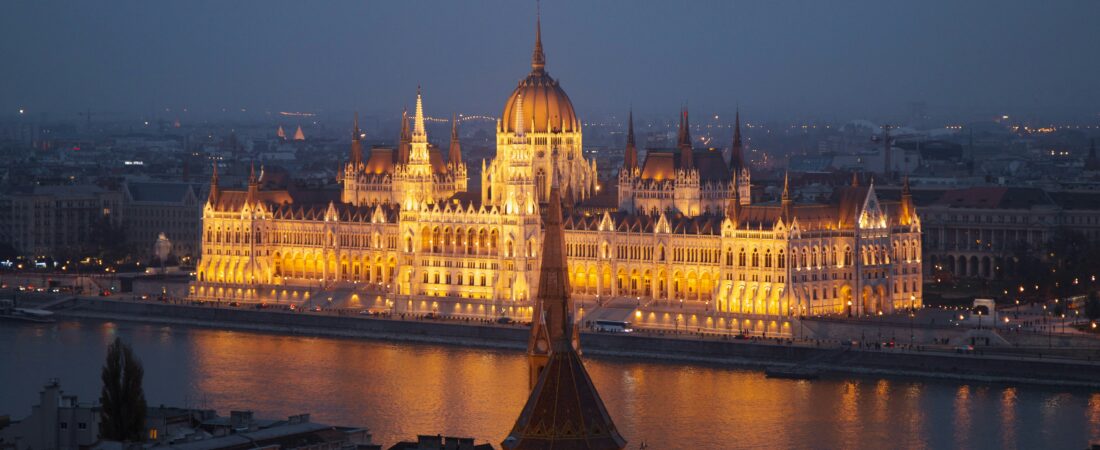
Budapest is one of those cities that hits you immediately. You cross the Chain Bridge, look up at the Parliament glowing gold on the riverbank, and think: how is this place not more famous?
It is, of course, extremely famous — but somehow it still manages to feel like a discovery. Budapest is grand without being exhausting, affordable without feeling cheap, and packed with experiences you won’t find anywhere else in Europe. Thermal baths inside Art Nouveau palaces. Bars built inside bombed-out ruins. A city split in two by the Danube, each side with its own completely different personality.
If you’re planning a trip to Budapest and wondering where to start, this guide covers everything worth knowing.
Why Visit Budapest?
Budapest is the capital of Hungary and sits on the Danube River, split between hilly Buda on the west bank and flat, energetic Pest on the east. The two were separate cities until 1873, and that contrast still defines the city today: Buda is historic, quiet, and full of castle views; Pest is lively, cosmopolitan, and where almost all the restaurants, bars, and nightlife are.
It’s one of the most beautiful cities in Europe — the entire Danube riverfront is a UNESCO World Heritage Site — and one of the most affordable. A beer costs around €2, a proper sit-down dinner with wine rarely tops €20, and even a day at a luxury thermal bath won’t break the bank.
1. The Hungarian Parliament Building
The Parliament is Budapest’s most iconic landmark and one of the most stunning buildings in all of Europe. Built between 1885 and 1904 in neo-Gothic style, it was inspired by the British Houses of Parliament but is arguably more impressive — particularly at night, when it glows gold against the Danube.
You can visit the interior on a guided tour (around €25, book online in advance as same-day tickets often sell out). The highlight is the central dome hall, where Hungary’s Holy Crown is displayed under armed guard.
Tip: Even if you don’t go inside, walk to the Pest riverbank at sunset and watch the Parliament light up over the water. It’s free and extraordinary.
2. Buda Castle and Castle Hill
On the Buda side of the river, Castle Hill dominates the skyline. The castle complex dates to the 13th century and has been rebuilt multiple times after invasions and wars — the current structure is largely 18th-century Baroque.
Inside the castle you’ll find the Hungarian National Gallery (free on certain days), the Budapest History Museum, and access to the Buda Castle Cave system — a 10-km labyrinth of tunnels once used as wine cellars, bomb shelters, and even a prison. The cave tour is one of the most memorable experiences in Budapest.
Getting up: take the historic funicular from Clark Ádám Square (€5–6 return) or simply walk up. Free to explore the exterior and grounds 24/7.
3. Fisherman’s Bastion
Right next to the castle, Fisherman’s Bastion is a neo-Romanesque series of terraces and fairy-tale towers built in 1902. It offers the single best view in Budapest — a panoramic sweep across the Danube to the Parliament and the entire Pest skyline.
The lower terrace is free to enter. The upper walkways cost a small fee in summer. Go early morning to avoid the tour groups and get the best light for photos.
4. Széchenyi Thermal Baths
Budapest sits on top of more than 100 natural thermal springs — more than any other capital city in the world. Bathing culture here goes back to Roman times, and visiting a thermal bath is the single most quintessential Budapest experience.
The Széchenyi Baths in City Park are the largest and most famous — a stunning yellow Baroque palace with outdoor pools, indoor pools, steam rooms, and saunas. Entry costs around €30–35 for a full day. Go on a weekday to avoid weekend crowds.
Important note: The Gellért Baths (Art Nouveau, beautiful interior) are currently closed for renovation until 2028. The Rudas Baths are a great alternative — a 16th-century Turkish bath with a spectacular rooftop hot tub overlooking the Danube, open for night bathing on Saturdays.
5. The Ruin Bars — Starting with Szimpla Kert
Budapest’s ruin bars are unlike anything else in Europe. In the 2000s, entrepreneurs started opening bars inside derelict buildings and abandoned lots in the Jewish Quarter — filling them with mismatched furniture, graffiti, vintage objects, and multiple rooms of different music. The result is something between a bar, an art installation, and a festival.
Szimpla Kert is the original and still the best. It’s enormous, with dozens of rooms and spaces, a massive outdoor courtyard, and walls covered in years of scrawled messages and decorations. Go early evening for a more relaxed drink; after 10pm it becomes very busy. Entry is usually free.
Other great ruin bars: Instant, Fogas Ház, and Corvin Club.
6. The Great Market Hall (Központi Vásárcsarnok)
Budapest’s most impressive indoor market occupies a stunning neo-Gothic building near the Liberty Bridge. Three floors of food stalls, spice vendors, embroidered textiles, paprika in every form imaginable, and Hungarian crafts.
The ground floor is the best for food — pick up lángos (deep-fried dough with sour cream and cheese, a Hungarian street food classic), fresh produce, and local sausages. The upper floors have souvenirs and a small food court with traditional dishes.
Entry is free. Go on a weekday morning for the best experience.
7. St. Stephen’s Basilica
The most important church in Hungary, St. Stephen’s Basilica was built between 1851 and 1905 and can hold 8,500 people. The interior is magnificent — marble, gold mosaics, and a stunning 300-foot dome. Inside you can also see the mummified right hand of King Stephen I, Hungary’s first king and founder of the nation. (Yes, really.)
Entry to the church is free. Climbing the dome tower costs around €10 and gives excellent views over the city center. Book a guided tour to skip queues and get more context.
8. Andrássy Avenue and the City Park
Andrássy Avenue is Budapest’s grandest boulevard — a UNESCO-listed street lined with Neo-Renaissance mansions, embassies, and luxury boutiques, running from the city center all the way to City Park. Take the Metro Line 1 (Continental Europe’s oldest underground railway, dating to 1896) along the avenue — it’s a sight in itself.
At the end of the avenue, City Park (Városliget) is one of the most pleasant green spaces in Central Europe. It contains Széchenyi Baths, Vajdahunyad Castle (a romantic mock-medieval complex built for the 1896 Millennium Exhibition), and the new House of Music — a stunning contemporary concert hall and museum that opened in 2022.
9. The Danube by Tram 2
One of the best free experiences in Budapest is simply riding Tram 2 along the Pest bank of the Danube. The route passes the Parliament, Buda Castle, all the famous bridges, and the entire historic waterfront — and costs just the price of a tram ticket (€1.20).
Go at sunset and sit on the right side of the tram heading north. Have your camera ready.
10. The House of Terror
One of the most powerful museums in Europe, the House of Terror is located in the actual building from which Hungary’s secret police operated during the Nazi and communist eras. The exhibitions cover fascist and Soviet-era Hungary, political repression, and the personal stories of victims detained, interrogated, and killed in this building.
It’s heavy, but important and brilliantly executed. Allow 2–3 hours. Entry costs around €20.
11. A Night Cruise on the Danube
Budapest at night from the water is one of the great European views. The Parliament, Buda Castle, the Chain Bridge, and all the illuminated facades reflecting on the Danube — it looks almost unreal.
Numerous operators run evening cruises from the Pest riverbank, typically 1–1.5 hours, from around €15–25 per person. Book in advance, especially in summer.
12. Dohány Street Synagogue
The Dohány Street Synagogue is the largest synagogue in Europe and the second largest in the world. Built in 1859 in Moorish Revival style, it can seat 3,000 people and is an extraordinary piece of architecture. The complex also includes a cemetery, a memorial garden with a weeping willow sculpture, and a museum of Jewish history in Hungary.
Entry costs around €20–25. Open Sunday to Thursday 10am–6pm, Friday 10am–4pm (closed Saturday).
13. Gellért Hill and the Citadel
On the Buda side, Gellért Hill rises 235 meters above the city and offers the most dramatic panoramic views in Budapest. The walk up takes about 30 minutes and passes through parkland and past the Gellért Monument, a dramatic statue overlooking the Danube.
At the top, the Citadel (a 19th-century Habsburg fortress) offers 360-degree views. It’s free to visit and one of the best spots in the city for sunset photography.
14. Eat Hungarian Food
Budapest’s food scene is excellent and seriously underrated. Beyond the famous goulash, Hungarian cuisine has a lot to offer:
- Goulash (gulyás) — the national dish, a rich beef and paprika soup. Order it at any traditional restaurant
- Lángos — deep-fried dough topped with sour cream and cheese, the ultimate Hungarian street food
- Chicken paprikash (paprikás csirke) — tender chicken in a creamy paprika sauce, served with egg noodles
- Chimney cake (kürtőskalács) — a sweet spiral pastry cooked over charcoal, sold at street stalls
- Halászlé — a spicy river fish soup, especially good near the Danube
For budget meals, the Great Market Hall upper floor and the street food court Karavan (next to Szimpla Kert) are excellent options.
15. Day Trip to Szentendre
Just 30 minutes north of Budapest by the HÉV suburban train (from Batthyány tér station), Szentendre is a charming small town on the Danube with colorful Baroque houses, Serbian Orthodox churches, artisan shops, and excellent cake cafés.
It gets busy on weekends (essentially all of Budapest goes), so visit on a weekday if possible. The train costs around €3 return and runs frequently. Allow half a day.
Budapest Travel Tips
Best time to visit: Spring (April–June) and autumn (September–November) offer the best weather and fewer crowds. Avoid July and August if you can — it’s peak season and very hot.
How long to spend: 3–4 days is ideal. The city is large enough that you won’t run out of things to do.
Currency: Hungarian Forint (HUF). Budapest is not on the Euro — exchange money on arrival or use ATMs. Many places now accept cards but always carry some cash.
Getting around: Budapest has an excellent metro, tram, and bus network. A 24-hour pass costs around €6.50 and covers everything. Download the BKK app for route planning.
Budget: Budapest is very affordable. Expect to spend €50–80/day on a mid-range budget including accommodation, food, transport, and a couple of paid attractions.
Language: Hungarian is notoriously difficult. Don’t try. English is widely spoken in the center. Köszönöm (thank you) will earn you instant appreciation from locals.
Where to Stay in Budapest
Budget (hostels, €15–30/night) The Jewish Quarter (District VII) is the best area — central, lively, close to the ruin bars and excellent restaurants.
Mid-range (€70–120/night)
- Stories Boutique Hotel — colorful, funky rooms in a great location, excellent on-site café
- Stay in District V (city center) or District VII for the best access to everything
Luxury (€150+/night)
- Four Seasons Gresham Palace — one of the most stunning hotel buildings in Europe, right by the Chain Bridge
- Hilton Budapest — built into the ruins of a medieval castle in the Castle District, extraordinary views
Getting to Budapest
- From Bratislava: Train (~2.5 hours, from €15) or FlixBus (~2.5 hours)
- From Vienna: Train (~2.5 hours, from €20) or FlixBus
- From Prague: Train or bus (~6–7 hours)
- By air: Budapest Ferenc Liszt International Airport (BUD) is 30 minutes from the center. Take Bus 100E direct to the city center (€4) or Bus 200E + Metro M3 for a cheaper option
Final Thoughts
Budapest rewards every type of traveler. History lovers, food obsessives, nightlife seekers, architecture enthusiasts, spa devotees — the city has something extraordinary for all of them. And it does it all at a price that makes Western European capitals look embarrassing.
If you’re building a Central Europe trip, pair Budapest with Bratislava (2.5 hours by train) and Vienna for one of the best travel routes on the continent.
Planning a Central Europe trip? Read our guides to the best things to do in Bratislava and our 3-day Bratislava itinerary for the perfect companion destinations.
You might also like:
- Budapest vs Bratislava: Which City Should You Visit First?
- The Perfect 7-Day Central Europe Itinerary (Vienna, Bratislava, Budapest)
- 10 Most Underrated Cities in Europe Worth Visiting in 2025