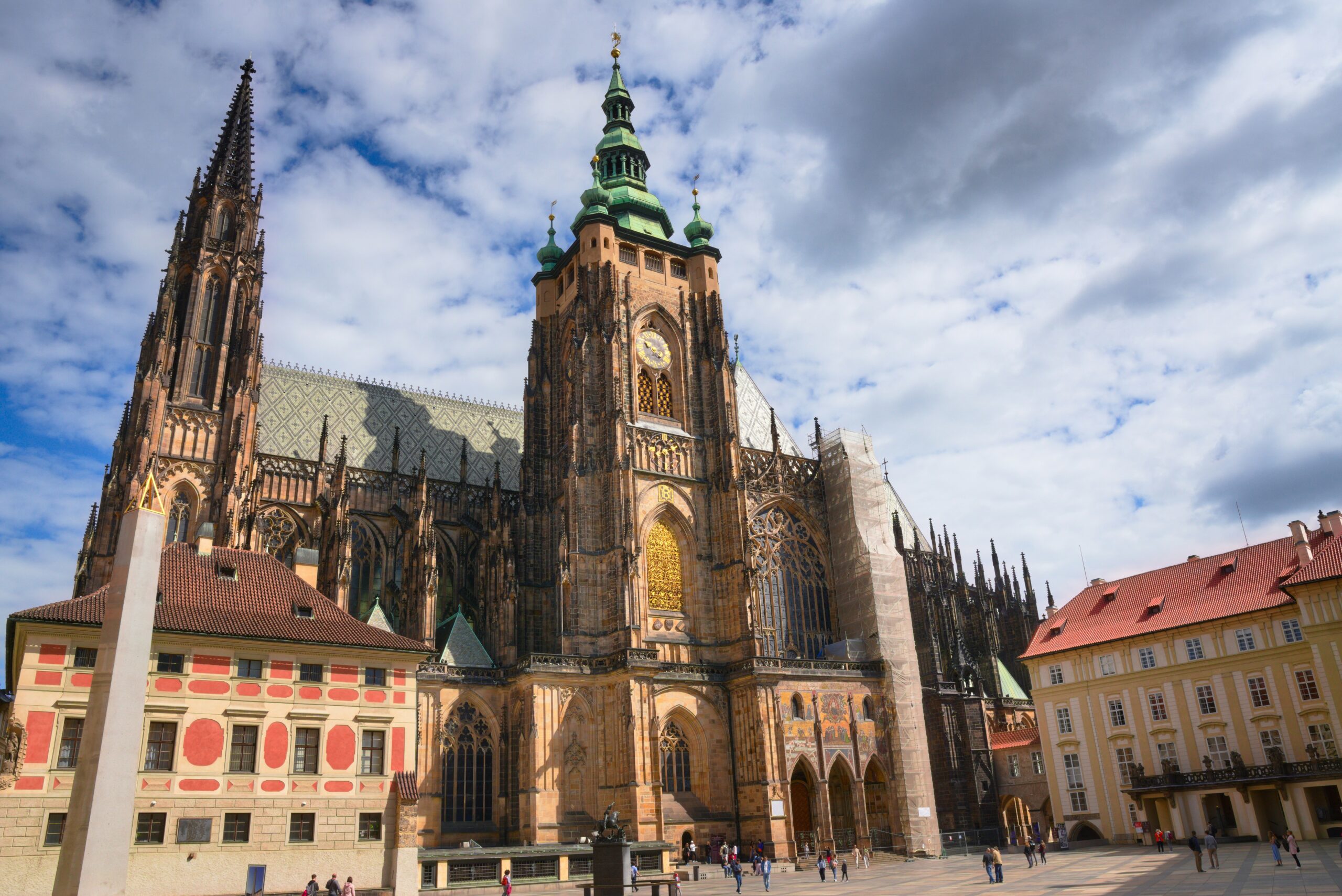
Three days in Prague is the sweet spot. Enough time to cross Charles Bridge at dawn before the crowds arrive, spend a full morning inside the castle complex, get genuinely lost in Malá Strana, and still have an evening to settle into a local pub with a glass of Pilsner Urquell and absolutely nothing to rush for.
This itinerary is built for first-time visitors who want to see Prague properly — the essential sights, the local neighborhoods, the food and beer, and one outstanding day trip. It’s based on careful research and the kind of honest, practical detail that actually helps on the ground.
Before You Arrive: Quick Planning Notes
- Currency: Czech Koruna (CZK), not Euro. 1€ ≈ 25 CZK. Use ATMs on arrival — avoid exchange offices at the airport.
- Getting around: Walking for the historic center, trams for everything else. A 24-hour transport pass costs around €5. Download the PID Lítačka app for tickets.
- Best area to stay: Old Town (Staré Město) or Malá Strana for convenience; Vinohrady or Žižkov for a more local feel at better prices.
- Book in advance: Prague Castle tickets, Jewish Quarter combo ticket, and any classical concerts. The Old Jewish Cemetery especially fills up fast.
- Pickpockets: A real issue on Charles Bridge, Old Town Square, and crowded trams. Keep valuables secure.
Day 1: Old Town, Charles Bridge at Sunrise, and the Jewish Quarter
Early Morning: Charles Bridge at Sunrise
Set your alarm. This is non-negotiable.
Charles Bridge at sunrise — around 6am in summer, later in winter — is one of the great travel experiences in Europe. The 15th-century bridge with its 30 Baroque statues is completely quiet at this hour, mist sometimes rising off the Vltava, Prague Castle glowing above the river in the early light. By 10am it’s packed shoulder to shoulder. At sunrise it’s just you, the statues, and the city slowly waking up.
Walk across, look back from the Malá Strana tower at the Old Town side, and take your time.
Breakfast: Head to The Bakeshop just off Old Town Square (opens at 7am) — excellent coffee and pastries, and at this hour you’ll have the vaulted space almost to yourself.
Morning: Old Town Square and the Astronomical Clock
After breakfast, walk to Old Town Square — the historic heart of Prague and a UNESCO-listed masterpiece of architectural diversity. Gothic, Baroque, and Romanesque buildings ring a vast cobblestone square that has been Prague’s main public space since the 12th century.
The centerpiece is the Astronomical Clock (Orloj) on the Old Town Hall Tower, installed in the early 15th century. Every hour on the hour, figures of the Twelve Apostles parade past the windows while Death rings a bell. It’s touristy, yes — but genuinely mesmerizing. The 9am show is the quietest.
Climb the Old Town Hall Tower (€10) for the best panoramic view of the square and the city rooftops. Worth every cent.
Look for the Church of Our Lady before Týn — the twin Gothic spires that dominate the eastern side of the square. It’s one of Prague’s most recognizable images and the interior is surprisingly quiet and beautiful.
Late Morning: The Jewish Quarter (Josefov)
Walk north from Old Town Square into Josefov — Prague’s historic Jewish Quarter, one of the most historically significant and moving neighborhoods in Europe.
The combined Jewish Museum ticket (~€20) covers six synagogues and the Old Jewish Cemetery. Highlights:
- Old Jewish Cemetery — 12,000 gravestones layered on top of each other over centuries, leaning at impossible angles in a haunting landscape under ancient trees
- Spanish Synagogue — an explosion of Moorish Revival decoration in gold and red, one of the most beautiful interiors in Prague
- Old-New Synagogue (1270) — the oldest active synagogue in Europe
Allow 2–3 hours. Prague’s Jewish history is both tragic and miraculous — it survived largely because Hitler intended to preserve it as a museum of an extinct race, which gives the whole quarter an additional layer of somber significance.
Afternoon: Wenceslas Square and New Town
After lunch, walk south to Wenceslas Square — less a square, more a grand boulevard lined with Art Nouveau buildings, cafés, and boutiques. This is where Czech history was made: the 1968 Prague Spring, Jan Palach’s self-immolation in 1969, and the Velvet Revolution in 1989.
Walk to the top to see the equestrian statue of St. Wenceslas, then duck into the Palác Lucerna arcade nearby — a hidden gem with a David Černý sculpture of an upside-down horse hanging from the ceiling in deliberate mockery of the serious Wenceslas statue outside.
Walk back through the Powder Tower (Prašná Brána) — one of Prague’s last remaining medieval city gates, 65 meters tall with a viewing platform at the top (€6).
Evening: Náplavka Riverbank and Dinner
End your first day at the Náplavka — the long riverside path along the Vltava, where locals gather in the evening with drinks, live music under the bridges, and views of Charles Bridge lit up at night.
For dinner, try Lokál Dlouhááá — the pub where Prague locals actually eat. Loud, long, and packed with Czech office workers, it serves the freshest Pilsner Urquell in the city and excellent traditional Czech food. Order the svíčková (braised beef tenderloin with cream sauce and dumplings) or the smažený sýr (fried cheese). Budget around 250–350 CZK for a full meal with beer.
Day 2: Prague Castle, Malá Strana, and a Classical Concert
Day two crosses the river into Buda — sorry, into Malá Strana and the Castle District. This is the most beautiful and historic part of Prague.
Morning: Prague Castle Complex
Take tram 22 up the hill or walk — allow the full morning for Prague Castle, the largest castle complex in Europe with more than 700 rooms.
Buy Circuit B (~€14) which covers the main highlights:
- St. Vitus Cathedral — it took almost 600 years to complete. Don’t miss the Art Nouveau window by Alfons Mucha in the north transept.
- The Old Royal Palace — medieval halls where Bohemian kings were crowned, including the vast Vladislav Hall with its extraordinary Gothic vaulted ceiling
- Golden Lane — a row of tiny colorful houses built into the castle walls, where Franz Kafka briefly lived at number 22
The castle grounds and gardens are free to enter. The best viewpoint is near the Black Tower — looking back over the city at dusk.
Lunch: Café Lobkowicz inside Lobkowicz Palace has a lovely terrace with castle views. Or descend through the castle gardens to Malá Strana and find a local restaurant on Nerudova Street.
Afternoon: Malá Strana
Malá Strana (the Lesser Quarter) is where Prague gets quiet, intimate, and genuinely beautiful. Baroque churches, steep cobblestone stairs with city views, hidden garden courtyards, and a slower pace than the Old Town.
Key stops:
- Church of St. Nicholas — one of the finest Baroque churches in Central Europe, with a magnificent frescoed ceiling and dome
- Kampa Island — a peaceful park along the Vltava with views of Charles Bridge, and David Černý’s bizarre giant crawling baby sculptures
- Lennon Wall — a living, ever-changing canvas of peace graffiti started as a silent protest against the communist regime in the 1980s. Always being repainted, always worth a photo.
- Wallenstein Palace Garden — a hidden Baroque garden full of peacocks, free to enter, almost always quiet
- Petřín Hill — take the funicular up (included in your tram ticket) for panoramic views and the Petřín Lookout Tower
Evening: Classical Concert at the Klementinum
For the evening, book a classical concert at the Klementinum’s Mirror Chapel — a small, intimate Baroque hall with golden stucco, ceiling frescoes, and actual mirrors lining the walls. You don’t need to be a classical music fan to appreciate the atmosphere. Tickets cost around €25–35 and should be booked in advance.
Alternatively, Jazz Dock — a floating jazz club right on the river — hosts world-class musicians with cover charges typically 150–300 CZK.
Day 3: Vyšehrad, Local Neighborhoods, and a Beer Spa
Your final day takes you off the main tourist trail and into the Prague that locals actually inhabit.
Morning: Vyšehrad
Take the metro (line C, Vyšehrad station) to Vyšehrad — the ancient fortress on a cliff south of the Old Town that most tourists never reach.
This is where Prague’s legendary history begins. The fortress predates Prague Castle by centuries, and the grounds contain the Vyšehrad Cemetery, where Czech national heroes are buried: composers Dvořák and Smetana, painter Alfons Mucha, and many others. The Basilica of St. Peter and St. Paul crowns the hill in neo-Gothic splendor.
The views over the Vltava River from the ramparts are extraordinary — arguably better than anything in the Old Town — and you’ll share them with almost no one.
Entry to the grounds is free. Allow 1.5–2 hours.
Mid-Morning: Letná Park and the Beer Garden
Walk or take a tram north to Letná Park on the bluff above the Vltava. The park mixes skater culture with art-student vibes, and at the edge of the bluff, a no-frills beer kiosk serves cold Pilsner Urquell with what may be the best view in Prague — the bridges lining up one after another across the river, the castle and Old Town rooftops beyond.
A half-liter costs around 60–80 CZK here. Sit on the grass, drink slowly, and take it in.
Afternoon Option A: Day Trip to Český Krumlov
If you have a full third day, Český Krumlov is the best day trip from Prague. This UNESCO World Heritage town in South Bohemia — about 3 hours by bus — feels like stepping into a fairy tale: a medieval Old Town of colored Baroque houses, a vast castle complex on a cliff above a bend in the Vltava, and cobblestone streets that look completely unchanged from the 17th century.
The highlight is Český Krumlov Castle — one of the largest castle complexes in Central Europe, with a beautifully preserved Baroque theater. Don’t miss wandering the Old Town square and having lunch at a traditional Czech tavern.
Take FlixBus or RegioJet from Prague (around €8–12 each way, book in advance). Allow a full day.
Afternoon Option B: Czech Beer Spa
If you’d rather stay in Prague, book a Czech beer spa experience — you really do soak in a tub of warm hops and malt while sipping unlimited beer from a tap beside the bath. It’s bizarre, uniquely Czech, and genuinely enjoyable. Book well in advance as it sells out.
Evening: Farewell Dinner in Vinohrady
For your last dinner, head to Vinohrady — Prague’s most elegant residential neighborhood, full of Art Nouveau apartment buildings, independent restaurants, and wine bars.
Try svíčková one more time, or explore the neighborhood’s excellent international food scene. End the evening with a shot of Becherovka — the Czech herbal liqueur that’s been produced in Karlovy Vary since 1807. Every Czech pub serves it, and it’s the proper way to end a meal.
3-Day Prague Itinerary: Quick Summary
Day 1 — Old Town: Charles Bridge at sunrise → Old Town Square → Astronomical Clock → Jewish Quarter → Wenceslas Square → Náplavka evening → Dinner at Lokál
Day 2 — Castle District: Prague Castle (Circuit B) → Malá Strana → Kampa Island → Lennon Wall → Petřín Hill → Classical concert at Klementinum
Day 3 — Local Prague: Vyšehrad → Letná Park beer garden → Day trip to Český Krumlov (or beer spa) → Farewell dinner in Vinohrady
Budget Breakdown for 3 Days in Prague
| Category | Budget (CZK) | Budget (€) |
|---|---|---|
| Accommodation (3 nights) | 2,000–3,500 | €80–140 |
| Food and drink | 1,500–2,500 | €60–100 |
| Activities and entrance fees | 1,000–1,500 | €40–60 |
| Transport (local + day trip bus) | 500–800 | €20–32 |
| Concert or beer spa | 500–800 | €20–32 |
| Total | ~5,500–9,100 CZK | €220–364 |
Prague is one of the most affordable capital cities in Central Europe. Three days here costs significantly less than the equivalent trip to Vienna or Paris, with no compromise in quality or experience.
Practical Tips
- Go early everywhere — Charles Bridge, Old Town Square, and Prague Castle are dramatically better before 9am
- Tram 22 is the most useful line for tourists, connecting the city center to Malá Strana and the castle
- Czech beer etiquette: Don’t touch the foam, don’t ask to top it up — the thick head is protecting the beer
- Cobblestones everywhere — wear comfortable shoes with good grip
- Saturday morning at Náplavka is a farmers market — one of the best free experiences in the city
- Exchange money: Use ATMs or your bank card. Exchange offices on tourist streets have terrible rates.
Planning a longer Central Europe trip? Prague pairs perfectly with Vienna (4 hours by train) and Bratislava (4 hours). Read our guides to the best things to do in Vienna, best things to do in Bratislava, and best things to do in Budapest to complete the perfect Central Europe route.
You might also like:
- The Perfect 7-Day Central Europe Itinerary (Prague, Vienna, Bratislava, Budapest)
- 10 Most Underrated Cities in Europe Worth Visiting in 2026
- Best Things to Do in Český Krumlov: A Day Trip from Prague