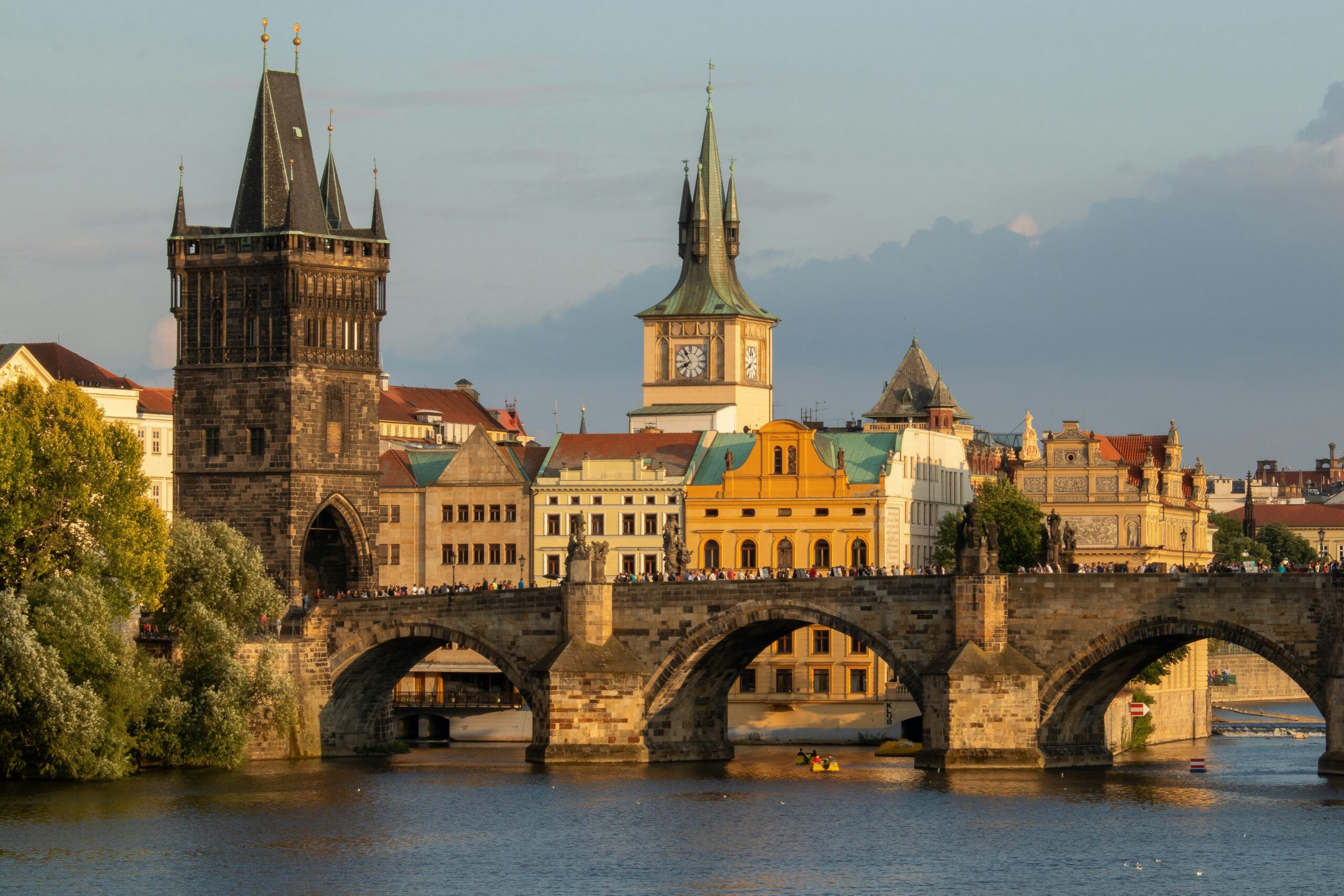
Prague does something to you. You walk across the Charles Bridge at dawn, the castle looming above through the morning mist, and you understand immediately why people come here and never quite get over it.
The Czech capital is one of the most beautiful cities in Europe — a UNESCO-listed historic center that survived World War II almost completely intact, a skyline of Gothic spires and Baroque domes, and a culture built on literature, music, and world-class beer. It’s also one of the most visited cities on the continent, which means you need to know how to do it right.
This guide covers the 15 best things to do in Prague — the unmissable, the underrated, and the practical details that make the difference between a good trip and a great one.
Why Visit Prague?
Prague is the capital of the Czech Republic and sits on the Vltava River in the heart of Bohemia. Its historic center has been a UNESCO World Heritage Site since 1992 — one of the best-preserved medieval city centers anywhere in Europe. The city is often called the “City of a Hundred Spires” for its extraordinary density of Gothic towers, Baroque church domes, and Renaissance facades.
It’s also extremely well connected: Vienna is 4 hours away by train, Bratislava 4 hours, Berlin 4.5 hours, and Budapest about 7 hours. Budget airlines connect Prague to virtually every European city.
1. Prague Castle
Prague Castle is the largest castle complex in Europe, containing more than 700 rooms. It sits on a hill above the Vltava River and has been the seat of Czech kings, Holy Roman Emperors, and presidents for over a thousand years.
The complex is enormous — allow at least half a day. The highlights are:
- St. Vitus Cathedral — it took almost 600 years to complete and is a must-visit for its architecture and stunning stained-glass windows. The Mucha window in the north transept is extraordinary.
- The Old Royal Palace — medieval halls where Bohemian kings were crowned
- St. George’s Basilica — the oldest surviving church in Prague, dating to 920 AD
- The Golden Lane — a row of tiny colorful houses built into the castle walls, where Franz Kafka briefly lived
Entry tickets come in circuits — Circuit B (~€14) covers the main highlights. The castle grounds and gardens are free to enter. The best time to visit is during sunset, and the best spot to view it is near the Black Tower.
2. Charles Bridge
The 15th-century Charles Bridge is one of Prague’s most striking landmarks, featuring 16 stone arches, two watchtowers, and 30 blackened Baroque statues depicting various saints.
Walking across it is obligatory — but the experience depends entirely on when you go. By 10am it’s packed shoulder to shoulder with tourists, buskers, and selfie sticks. At sunrise it’s quiet, peaceful, and genuinely beautiful — the city slowly waking up around you, golden light on the towers, and sometimes mist rising off the river.
Go at dawn. It’s worth the early start.
3. Old Town Square and the Astronomical Clock
Old Town Square is home to some of the most historic attractions in the city, including the Old Town Hall and the Prague Astronomical Clock, a beautiful timepiece dating back to the 1400s. Other architectural highlights include the baroque Church of St. Nicholas and the Church of Our Lady before Týn, instantly recognizable for its two Gothic spires.
The Astronomical Clock (Orloj) puts on a mechanical show every hour — figures of the Twelve Apostles parade past the windows while Death rings a bell. Go early — the 9am show is the quietest and gives you the best view without getting elbowed by someone’s selfie stick.
Climb the Old Town Hall Tower (€10) for the best panoramic view of the square and the city rooftops.
4. The Jewish Quarter (Josefov)
Prague’s Jewish Quarter is one of the most historically significant and moving neighborhoods in Europe. For centuries it was one of the largest Jewish communities in Central Europe; today it contains six synagogues, a town hall, and the Old Jewish Cemetery — where 12,000 gravestones are layered on top of each other in a haunting landscape of leaning stone.
The Spanish Synagogue is architecturally extraordinary — an explosion of Moorish Revival decoration in gold and red. The Old-New Synagogue (1270) is the oldest active synagogue in Europe.
A combined ticket covering all the synagogues and the cemetery costs around €20. Allow 2–3 hours.
5. Malá Strana (The Lesser Quarter)
Malá Strana has many names including the Little Quarter and Lesser Town — its pretty streets are a pleasure to explore, and you won’t find the same crowds there that you will find in the Old Town Square. It is one of the oldest areas of Prague, brimming with Baroque houses and gorgeous alleyways.
This is where Prague gets quiet and genuinely beautiful. Wander up Nerudova Street toward the castle, duck into the hidden garden of the Wallenstein Palace, and find the narrowest street in Prague (Vinárna Certovka — it has its own traffic light).
Don’t miss the Church of St. Nicholas in Malá Strana’s main square — one of the finest Baroque churches in Central Europe.
6. The Klementinum and its Library
The Klementinum is home to the Baroque Library Hall, considered one of the most beautiful libraries in the world, the striking Mirror Chapel and the 68-metre-high Astronomical Tower. The library is the real highlight, ornate and filled with beautiful frescos, like something you might imagine in the basement of Hogwarts.
Booking a tour is essential — there’s no general admission to the library or the Astronomical Tower without one. Tours run regularly and cost around €15. The views from the Astronomical Tower over the Old Town rooftops are excellent.
7. Petřín Hill and the Lookout Tower
On the Malá Strana side of the river, Petřín Hill is a green oasis rising above the city with panoramic views across the rooftops to Prague Castle and the Vltava. It’s a peaceful escape from the Old Town crowds.
At the top, the Petřín Lookout Tower — a miniature Eiffel Tower built for the 1891 Prague Exposition — gives even higher views. Entry costs around €6. Take the funicular railway up (included in the standard public transport ticket) and walk back down through the orchards and gardens.
8. Wenceslas Square
Wenceslas Square is one of Prague’s largest public squares — wide and tree-lined with sidewalk cafés and stylish boutiques. The square is bursting with history, from its intricate Art Nouveau buildings to its poignant memorial to the victims of Soviet occupation.
This is where Jan Palach set himself on fire in 1969 to protest the Soviet invasion, where Alexander Dubček addressed the crowds during the Prague Spring, and where the Velvet Revolution was declared in 1989. The weight of 20th-century Czech history is palpable here.
Walk to the top to see the famous equestrian statue of St. Wenceslas, then duck into the Palác Lucerna arcade — a hidden gem with a David Černý sculpture of an upside-down horse hanging from the ceiling.
9. Vyšehrad
Most tourists never make it to Vyšehrad — the ancient fortress on a cliff south of the Old Town. That’s their loss.
This is where Prague’s legendary history begins: the fortress predates Prague Castle by centuries, and the site is steeped in Czech mythology. The grounds contain the Vyšehrad Cemetery, where Czech legends are buried — composers Dvořák and Smetana among them — and spectacular views over the Vltava River below.
It’s a 20-minute walk or short metro ride from the Old Town (line C, Vyšehrad station). Entry to the grounds is free. Come here for peace, history, and the views that most visitors never see.
10. The Dancing House
One of Prague’s most striking modern buildings, the Dancing House (Tančící dům) was designed by Frank Gehry and Vlado Milunić and completed in 1996. It looks like two figures dancing — nicknamed “Fred and Ginger” after Fred Astaire and Ginger Rogers.
It sits on the Vltava riverbank, a 15-minute walk south of the Old Town. The rooftop bar is open to non-guests and offers excellent views up the river toward Charles Bridge. Entry to the rooftop is free.
11. Drink Czech Beer Properly
Czech Republic produces some of the finest beer in the world — Pilsner Urquell, Kozel, Budvar — and Prague is the best place to drink it. The average price of a half-liter of draft beer in a local pub is around €1.50–2, making it one of the cheapest cities in Europe for a night out.
Where to drink like a local:
- U Fleků — a 500-year-old brewery in the center, serving their own dark lager brewed on site since 1499. Touristy but genuinely historic and worth one visit.
- Lokál — a modern take on the traditional Czech pub, with perfectly poured Pilsner Urquell and excellent food. Several locations across the city.
- Pivovarský klub — a craft beer bar in Žižkov with over 30 taps and hundreds of bottled beers.
One important note: Czech beer culture has specific etiquette. Don’t touch the foam. Don’t ask for it to be topped up. The foam is the point — it protects the beer.
12. The Náplavka Riverbank
The Náplavka is a long path along Prague’s Vltava River with some of the best views of top landmarks including Prague Castle and Charles Bridge, as well as a string of very nice bars. On Saturdays, you’ll catch the Náplavka Farmers Market, where you can sample local food and sweets.
This is where young Prague comes to drink, eat, and watch the river. Grab a beer from one of the riverbank bars, find a good seat, and spend an afternoon doing nothing in particular. It’s one of the most pleasant free experiences in the city.
13. Franz Kafka Museum and Street Art
Prague was Franz Kafka’s city — he was born here, lived here almost his entire life, and set much of his most important work in its labyrinthine streets. The Franz Kafka Museum in Malá Strana is dedicated to his life and work, with original manuscripts and letters on display. Entry around €12.
Outside the museum, look for the David Černý sculpture of two men urinating into a map of the Czech Republic — just one example of Prague’s most controversial and brilliant public artist, whose work appears throughout the city. The Franz Kafka Rotating Head — a 42-layer mirrored sculpture that constantly shifts and rotates, eventually aligning to reveal the Czech writer’s face — sits right outside the Quadrio shopping centre and moves every 15 minutes.
14. Strahov Monastery and Library
High above Malá Strana, near the castle, Strahov Monastery has been home to a community of monks since the 12th century. The monastery is one of the most important landmarks in the Czech Republic and is famous for its historic library, which contains countless volumes including over 3,000 original manuscripts.
The two library halls — the Theological Hall and the Philosophical Hall — are among the most beautiful Baroque rooms in Europe. Entry to view the libraries costs around €10.
The monastery also has its own microbrewery, producing excellent Czech beer in a setting that’s been brewing since the Middle Ages. The terrace has fine views over the city.
15. A Vltava River Cruise
A Vltava river cruise is a pleasant and cheap way to spend an hour in the city away from the crowds — sailing under the many Prague bridges and checking out the scenery.
Cruises leave from the dock near Čech Bridge and run regularly from March to November. A basic one-hour cruise costs around €12–15. For a more special experience, book an evening dinner cruise or a sunset cruise as the light changes on the castle above.
Prague Travel Tips
Best time to visit: April–June and September–October. July and August are extremely crowded. Christmas markets in December are beautiful but busy.
How long to spend: 3 days covers the highlights. 4–5 days if you want a slower pace and a day trip.
Getting around: Prague’s historic center is very walkable. Trams are excellent for longer distances — a 24-hour pass costs around €5. Download the PID Lítačka app for tickets and routes.
Currency: Czech Koruna (CZK), not Euro. Use ATMs on arrival. Avoid exchange offices at the airport — the rates are terrible.
Budget: Prague is affordable by Western European standards. Expect €50–80/day on a mid-range budget.
Safety: Prague is safe but pickpockets are a real issue, especially on Charles Bridge, in the Old Town Square, and on crowded trams. Keep valuables secure and be alert when the Astronomical Clock strikes the hour — crowds gather and thieves take advantage.
Language: Czech. English is widely spoken in the center. Děkuji (thank you) is always appreciated.
Where to Stay in Prague
Budget (€20–40/night)
- Stay in Žižkov (District 3) — bohemian, local, cheap, and just 15 minutes’ walk from the Old Town
Mid-range (€70–130/night)
- Stay in Malá Strana for romance and proximity to the castle, or Vinohrady for a more local neighborhood feel
Luxury (€180+/night)
- The Augustine — a luxury hotel in a converted 13th-century monastery in Malá Strana
- Four Seasons Prague — riverside location with views of Charles Bridge from the terrace
Getting to Prague
- From Vienna: Train (~4 hours, from €20) or FlixBus
- From Bratislava: Train or bus (~4 hours)
- From Berlin: Train (~4.5 hours, from €25)
- From Budapest: Train (~7 hours) or overnight bus
- By air: Prague Václav Havel Airport (PRG) is 30 minutes from the center. Take Bus 119 to Nádraží Veleslavín metro station, then metro line A to the center
Final Thoughts
Prague is one of those cities that gets under your skin. The sheer density of beautiful architecture, the literary and musical history, the cheap beer and excellent food — it adds up to something that’s greater than the sum of its parts.
Go early in the morning. Walk across Charles Bridge before the crowds arrive. Climb up to the castle and look back at the city. And then find a pub with good draft Czech beer and settle in for the evening.
Planning a Central Europe trip? Prague pairs perfectly with Vienna (4 hours by train), Bratislava (4 hours), and Budapest. Read our guides to the best things to do in Vienna, best things to do in Bratislava and best things to do in Budapest to plan the perfect route.
You might also like:
- 3 Days in Prague: The Perfect Itinerary
- The Perfect 7-Day Central Europe Itinerary
- 10 Most Underrated Cities in Europe Worth Visiting in 2025