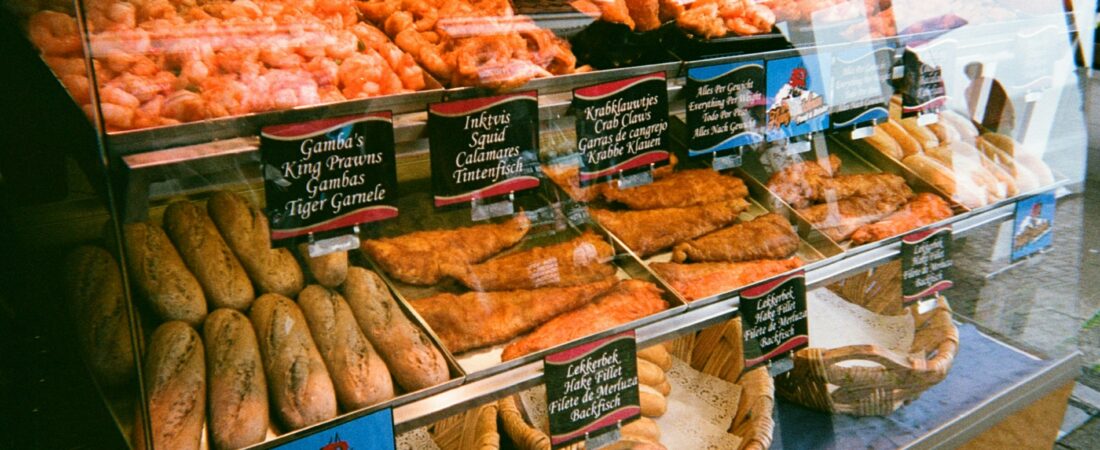
One of the great pleasures of Central Europe is that eating well costs almost nothing. The street food culture across this region — built on centuries of hearty, honest cooking — means that for €2–5 you can eat something genuinely extraordinary on a street corner, outside a market, or from a cart that’s been in the same spot for decades.
This guide covers the best street food across the five cities at the heart of our recommended Central Europe route: Kraków, Budapest, Vienna, Bratislava, and Prague. What to order, where to find it, how much to pay, and why it’s worth every cent.
Why Central European Street Food Deserves More Attention
Central European street food doesn’t get the same global recognition as the street food scenes of Southeast Asia or Mexico. That’s a mistake. The region has a deep, distinctive food culture built on centuries of tradition — Polish pierogi, Hungarian lángos, Czech trdelník, Slovak bryndzové halušky, Austrian Würstelstand sausages — and most of it is available on the street, from markets, and from carts at prices that make Western European food look expensive.
The best meals on a Central Europe trip are often the cheapest ones. This guide will help you find them.
Kraków, Poland — The Street Food Capital of Central Europe
Kraków is the best city in Central Europe for street food, and it’s not particularly close. The combination of Polish food traditions, a massive student population, and a market culture centered on Kazimierz produces a street food scene that’s both extraordinary and extraordinarily cheap.
Zapiekanka — The King of Kraków Street Food
The zapiekanka is the most important street food in Kraków, and arguably in all of Poland. A plain white baguette cut lengthwise, topped with sautéed mushrooms, melted semi-hard cheese, and ketchup, grilled under a broiler until golden. It originated in the 1970s during communist times when basic ingredients were scarce and people made the best of what they had. Today it’s a Kraków institution.
Find it at Plac Nowy in the Kazimierz district — the circular market hall in the center of the square has windows all around serving zapiekanka from around €1.50–3. There are queues at the good ones. Queue. It’s worth it.
The original zapiekanka was mushrooms and cheese, but modern versions come with dozens of toppings. Start with the classic. Order a second one.
Pierogi — Poland’s Soul Food
Pierogi are Poland’s most beloved food — stuffed dumplings, boiled or pan-fried, available everywhere in Kraków in dozens of varieties. The classic fillings are potato and cheese (ruskie), meat and mushroom, and sauerkraut and mushroom. Fried pierogi with sour cream and caramelized onions are the version to order.
Find them at Pierogi Mr Vincent near the Old Town — widely considered the best pierogi restaurant in Kraków — or at any of the pierogarnia (pierogi restaurants) scattered throughout the city. A plate of 8–10 costs around €5–8.
Oscypek — The Christmas Market Classic
Oscypek is smoked sheep cheese produced in the Tatra Mountains — a firm, golden-brown spindle-shaped cheese with a distinctive smoky flavor, grilled and served with cranberry jam. It’s sold from stalls throughout Kraków, especially at the Main Market Square and Christmas markets.
One portion (a few slices, grilled) costs around €2–3. The combination of smoky cheese and tart cranberry jam is one of the best simple food experiences in Poland.
Żurek in a Bread Bowl
Żurek is a sour rye soup with hard-boiled egg and Polish sausage — Poland’s most traditional soup, and one of the best things you can eat for €4–6 in a Kraków restaurant or bar mleczny (milk bar). The bread bowl version (the soup served inside a hollowed-out sourdough loaf) is the correct way to order it.
Find it at any traditional Polish restaurant or bar mleczny — communist-era self-service canteens that still operate throughout Kraków serving proper Polish food for prices that seem impossible in 2026.
Read our full guide: Best Things to Do in Kraków
Budapest, Hungary — Heavy, Honest, and Delicious
Budapest does heavy working-class food better than most. The Hungarian street food tradition is built on deep-frying, paprika, and portions that assume you’ve been doing manual labor all day. It’s extraordinary.
Lángos — Hungary’s Greatest Street Food
Lángos is the undisputed king of Hungarian street food — a disc of deep-fried dough, golden and crispy on the outside, soft inside, topped with sour cream and grated cheese. It’s simultaneously simple, indulgent, and completely addictive.
Find it at the Great Market Hall (Központi Vásárcsarnok) — the magnificent neo-Gothic market near the Liberty Bridge. The upper floor food court has been serving lángos for decades. Budget €3–4. Eat it immediately while it’s hot.
Variants include garlic butter lángos, lángos with ham and cheese, and sweet versions with jam — but the classic sour cream and cheese is the right choice for your first one.
Kürtőskalács — Chimney Cake
Kürtőskalács is a spiral pastry cooked over charcoal — a coil of sweet dough wrapped around a wooden cylinder, rotated over an open flame until golden, then rolled in cinnamon sugar. It’s sold from street stalls throughout Budapest, especially around Christmas markets and tourist areas.
It’s sweet, warm, and smells extraordinary. Budget €3–5.
Goulash Soup
Gulyás — Hungarian goulash — is technically a soup rather than a stew, made with beef, paprika, onions, and vegetables, served in a bread bowl or a simple bowl with crusty bread. It’s the national dish of Hungary and appears on virtually every menu, but the best versions are often found at market stalls and casual restaurants rather than tourist-facing restaurants.
Order it in a bread bowl for the full experience. Budget €5–7 at a market stall or casual restaurant.
Sausages at the Market
The Great Market Hall ground floor is one of the best places in Central Europe to buy and eat cured meats and sausages. Hungarian sausage (kolbász) — heavily spiced with paprika — is sold by the piece for tasting or by the kilogram to take home. The variety is extraordinary and the prices are market-level rather than tourist-level.
Read our full guide: Best Things to Do in Budapest
Vienna, Austria — The Würstelstand Culture
Vienna has its own distinctive street food culture centered around the Würstelstand — the Viennese sausage stand, a fixture on street corners throughout the city, open from mid-morning until the early hours of the morning.
The Würstelstand — Vienna’s Street Food Institution
The Würstelstand is not just a sausage stand. It’s a Viennese social institution — a place where office workers grab a quick lunch, where night owls end an evening, and where everyone from students to executives stands at a counter eating a sausage with mustard and a bread roll.
The sausages to know:
- Käsekrainer — a grilled pork sausage stuffed with pockets of melted Emmental cheese. The definitive Vienna sausage, and the one to order if you only try one.
- Debreziner — a spicy pork sausage, slightly thinner than the Käsekrainer
- Burenwurst — a thick, mild boiled sausage, the most traditional Viennese option
All served with mustard (ask for “scharf” for spicy, “süß” for sweet) and a Semmel (bread roll) or slice of rye bread. Budget €3–5.
The best Würstelstand in Vienna is debated with the seriousness of a philosophical question. Würstelstand am Naschmarkt and the stands near the Ringstrasse are reliable choices.
Naschmarkt Grazing
Vienna’s famous open-air market, the Naschmarkt, runs for nearly two kilometers and is the best place in the city for market street food. Graze your way through: Austrian cheese tastings, falafel, fresh bread, Turkish börek, Vietnamese spring rolls, olives, and excellent coffee.
The Saturday flea market alongside the food stalls is one of the best free experiences in Vienna — spend a morning here eating your way through the stalls and you’ll have one of the best meals in the city for under €15.
Palatschinken
Palatschinken are Austrian crêpes — thin pancakes filled with jam, Nutella, or sweet cheese and rolled into cylinders. They appear at market stalls and street food events throughout Vienna, and are one of the simplest and most satisfying sweet street foods in Central Europe.
Read our full guide: Best Things to Do in Vienna
Bratislava, Slovakia — Cheap, Hearty, and Underrated
Bratislava’s street food scene is small but excellent — and at Slovak prices, extraordinarily affordable.
Bryndzové Halušky — The National Dish
Bryndzové halušky is Slovakia’s national dish — potato dumplings with salty Slovak sheep cheese (bryndza) and crispy bacon. It’s the most important dish in Slovak cuisine and the one every visitor should try.
It’s primarily a restaurant dish rather than street food, but many casual pubs and traditional restaurants in the Old Town serve it as a quick, affordable lunch for €7–9. Order it, eat it, understand why Slovaks are proud of it.
Lokše — Slovak Potato Pancakes
Lokše are thin potato pancakes — a Slovak street food particularly associated with Christmas markets and outdoor food events. They’re served plain, with butter and sugar, or with various savory fillings.
Find them at Bratislava’s Christmas market (November–December) and at occasional food stalls around the Old Town year-round. Budget €2–4.
Medovina — Hot Honey Wine
Not food exactly, but medovina — hot honey wine — is Slovakia’s version of mulled wine and one of the best things to drink in Bratislava in the colder months. Made from fermented honey rather than grapes, it’s sweeter and more complex than standard Glühwein.
Find it at Christmas markets and traditional bars throughout the Old Town for €2–4 a cup.
Read our full guide: Best Things to Do in Bratislava
Prague, Czech Republic — Hearty and Satisfying
Prague’s street food is hearty and satisfying, built on Czech traditions of bread, meat, and beer.
Trdelník — The Tourist Trap That’s Actually Good
Trdelník is Prague’s most visible street food — a spiral of sweet dough wrapped around a cylinder, cooked over charcoal, and rolled in cinnamon sugar. You’ll see it everywhere in the Old Town, sometimes filled with ice cream or Nutella in tourist-facing versions.
The honest assessment: trdelník is delicious when done properly (warm, freshly made, simple cinnamon sugar) and mediocre when it’s been sitting around waiting for tourists. Buy it fresh, eat it immediately, and don’t pay more than €3–4.
It’s also worth knowing that trdelník didn’t originally come from Bohemia — its roots are debated, possibly Slovak or Hungarian in origin. The version in Prague today is a modern street food adapted for tourists. It’s still good.
Klobása — Grilled Sausage
Klobása is Czech grilled sausage — thick, smoky, and served with mustard and bread. It’s sold from grills throughout the Old Town and in beer halls across the city. Simple, honest, and exactly right with a glass of Czech Pilsner.
Find the best versions at Lokál (several locations) and at outdoor grills near the Old Town Square. Budget €3–5.
Smažený Sýr — Fried Cheese Sandwich
Smažený sýr is deep-fried cheese — a thick slice of Edam or Gouda, breaded and fried, served in a bread roll with tartare sauce. It sounds simple. It’s extraordinary. It’s beloved by Czech vegetarians and carnivores alike, available at virtually every pub and street food stall in Prague.
Budget €3–5 at a street stall. Order it late at night after a pub crawl — it’s the correct time.
Svařák — Czech Mulled Wine
Svařák is Czech mulled wine — slightly different from Austrian Glühwein, typically made with local Czech wine and spiced with cinnamon, cloves, and citrus. Available at Christmas markets and outdoor stalls throughout the city in autumn and winter for €3–4.
Read our full guide: Best Things to Do in Prague
The Best Markets for Street Food
The best street food in Central Europe is found at markets. Here’s the definitive list:
Plac Nowy, Kraków — the best single street food spot in Central Europe. The zapiekanka windows around the circular market hall, open until late, with a beer from one of the surrounding bars. Come here.
Great Market Hall, Budapest — three floors in a magnificent neo-Gothic building. Ground floor for meats, cheeses, and fresh produce; upper floor for lángos, goulash, and Hungarian classics.
Naschmarkt, Vienna — nearly two kilometers of market stalls. The Saturday combination of food market and flea market is unmissable.
Náplavka, Prague (Saturdays) — a riverside farmers market on Saturday mornings with local producers, artisan food, and excellent coffee. One of the best free experiences in Prague.
Stara Tržnica, Bratislava — the Old Market Hall, revived as a food and events space. Weekend mornings bring local producers, craft beer, and Slovak street food.
Street Food Budget Guide
| City | Budget street meal (€) | Best value dish |
|---|---|---|
| Kraków | €1.50–3 | Zapiekanka at Plac Nowy |
| Bratislava | €2–4 | Lokše at Christmas market |
| Budapest | €3–5 | Lángos at Great Market Hall |
| Prague | €3–5 | Smažený sýr from any pub |
| Vienna | €3–5 | Käsekrainer at Würstelstand |
Central Europe is one of the cheapest regions in Europe for eating well. A proper street food lunch in Kraków costs less than a coffee in Zurich. These are not compromises — they’re some of the best things you’ll eat on the entire trip.
Final Thoughts
Central European street food is one of the great underrated pleasures of European travel. The region has a deep, honest food culture built on centuries of tradition — and most of it is available on a street corner for €2–5.
The zapiekanka at Kraków’s Plac Nowy at midnight. Lángos from the Great Market Hall in Budapest. A Käsekrainer from a Viennese Würstelstand at 2am. Trdelník from a Prague Old Town stall, still warm from the charcoal.
These are not backup meals for when you can’t afford a restaurant. They’re the meals you’ll remember.
Planning your Central Europe trip? Read our 7-Day Central Europe Itinerary and our complete city guides for Kraków, Budapest, Vienna, Bratislava, and Prague.
You might also like:
- Europe on a Budget: How to Travel for Less in 2026
- Best Erasmus Cities in Europe: My Honest Ranking After Living It
- 10 Most Underrated Cities in Europe Worth Visiting in 2026