There’s a particular kind of travel satisfaction that comes from visiting a place before everyone else does. No queues, no overpriced tourist menus, no fighting for a photo without a hundred strangers in the frame.
Europe is full of these places. While millions of visitors pile into the same dozen cities year after year, there’s an entire continent of extraordinary destinations sitting quietly off the main tourist trail — medieval cities with intact Old Towns, Baroque capitals with world-class museums, port cities with incredible food scenes — all largely free of the crowds that have made Paris and Venice exhausting.
Here are the 10 most underrated cities in Europe worth visiting in 2026, based on genuine travel experience, local insight, and the simple principle that the best trips are often the ones you didn’t plan for.
1. Bratislava, Slovakia
Why it’s underrated: Most people use Bratislava as a day trip from Vienna and see almost nothing. That’s a mistake.
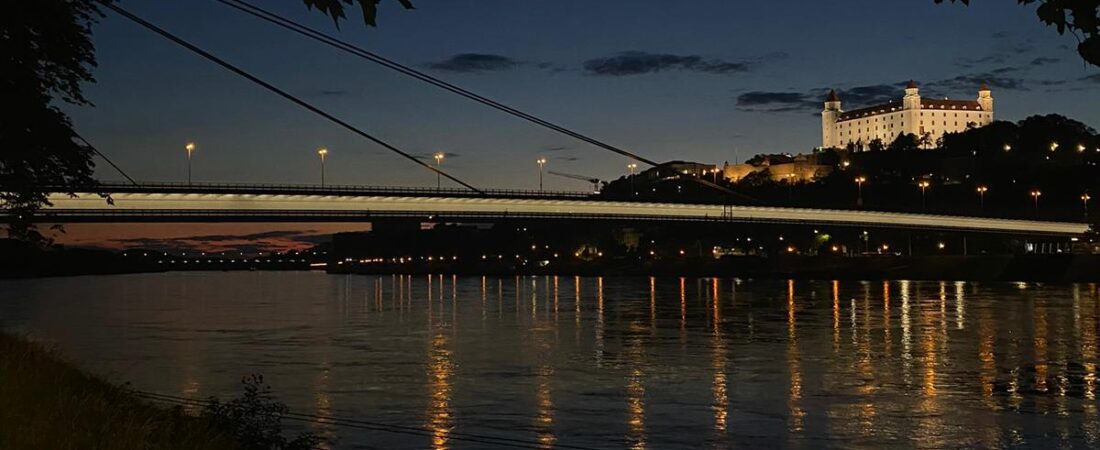
Slovakia’s compact capital sits on the Danube River — one hour from Vienna, two and a half from Budapest — and has everything a great European city needs: a charming medieval Old Town, a castle with panoramic river views, some of the cheapest beer in the eurozone, and a nightlife scene that punches well above its weight.
What makes Bratislava special is its human scale. This is a city where you can genuinely breathe — where you wander the cobblestone streets without being constantly jostled, where you can get a table at a great restaurant without a reservation, and where the locals are still genuinely happy to see you.
Don’t miss: The Bratislava Castle at sunset, the UFO Bridge observation deck, and the communist history tour in a vintage Škoda.
Best time to visit: May–June or September. December for the Christmas markets.
Read our full guide: Best Things to Do in Bratislava
2. Ljubljana, Slovenia
Why it’s underrated: Slovenia’s tiny capital — population 300,000 — is one of the most charming cities in Europe and almost nobody talks about it.
Ljubljana has a fairy-tale quality: a Baroque Old Town of pastel-colored buildings along the Ljubljanica River, a hilltop castle with views over terracotta rooftops, a pedestrianized center full of outdoor cafés, and a relaxed, sophisticated atmosphere that makes you want to stay longer than planned.
It was named Europe’s Green Capital in 2016 for its eco-friendly policies — the car-free center is a genuine pleasure to explore on foot or by bike. The food scene is excellent, accommodation is affordable, and the crowds are a fraction of what you’d find in comparable cities.
Don’t miss: Dragon Bridge, Ljubljana Castle, the Central Market, and a boat trip on the Ljubljanica.
Best time to visit: April–October. The city is magical in autumn.
3. Porto, Portugal
Why it’s underrated: Lisbon gets all the attention, but Porto is the better city.
Built on steep hills above the Douro River estuary, Porto is all tilework facades, crumbling Baroque churches, port wine cellars, and one of the best food scenes in Southern Europe. The historic Ribeira waterfront is a UNESCO World Heritage Site; the Lello bookshop is one of the most beautiful in the world; and a boat trip up the Douro Valley into the port wine country is one of the great day trips in Europe.
Porto is becoming more visited but remains far less crowded than Lisbon or Barcelona — and at significantly lower prices.
Don’t miss: The Ribeira waterfront, a port wine tasting in Vila Nova de Gaia, the São Bento railway station (with its extraordinary azulejo tile panels), and a Douro Valley day trip.
Best time to visit: April–June and September–October.
4. Ghent, Belgium
Why it’s underrated: Everyone goes to Bruges. Ghent is better.
Bruges is beautiful but overwhelmed by day-trippers — it can feel like a theme park in peak season. Ghent, just 30 minutes away by train, has the same medieval canals and Flemish architecture, but with a genuine local population, a large university, and an energy and cultural life that Bruges simply doesn’t have.
The medieval center — with the Gravensteen castle, the Graslei canal waterfront, and the Cathedral of Saint Bavo (home to the famous Van Eyck altarpiece) — is one of the finest in Northern Europe. And the food and beer scene is extraordinary, even by Belgian standards.
Don’t miss: The Gravensteen castle, the Graslei waterfront at dusk, the Cathedral of Saint Bavo, and a traditional Belgian beer café.
Best time to visit: May–September. The Ghent Festival in July is one of the best city festivals in Europe.
5. Bologna, Italy
Why it’s underrated: Italy’s most underrated city sits between Florence and Venice on every train route — and almost everyone passes straight through.
Bologna is Italy’s food capital — this is where ragù (Bolognese sauce), mortadella, and tagliatelle were invented — with a food culture so serious that locals will politely but firmly correct you if you put spaghetti with the Bolognese. The medieval center is gorgeous: 40 km of covered porticoes (arcaded sidewalks), two leaning towers, stunning Piazza Maggiore, and one of the oldest universities in the world.
It’s also significantly cheaper than Florence or Rome, and significantly less crowded. One of Europe’s great overlooked cities.
Don’t miss: The Two Towers, the food markets of Quadrilatero, a cooking class, and a day trip to Modena (home of Parmigiano Reggiano and balsamic vinegar).
Best time to visit: April–June and September–October.
6. Sarajevo, Bosnia and Herzegovina
Why it’s underrated: Sarajevo is one of the most fascinating and unexpectedly beautiful cities in Europe — and almost nobody in Western Europe thinks to go there.
Bosnia’s capital sits in a mountain valley and is where East genuinely meets West: Ottoman mosques and bazaars, Austro-Hungarian boulevards, Orthodox churches, and Catholic cathedrals all coexist within walking distance. The city was besieged for nearly four years during the 1990s Balkan war — the longest siege of a capital city in modern warfare — and that history is present and powerful everywhere you go.
But Sarajevo is also a city of extraordinary hospitality, excellent coffee culture (the Bosnian coffee tradition is unique in Europe), and food that will surprise you: ćevapi (grilled meat with flatbread), burek, and baklava at prices that seem almost impossibly cheap.
Don’t miss: Baščaršija bazaar, the Tunnel of Hope museum, the Latin Bridge (where the assassination that triggered World War I took place), and a Bosnian coffee ceremony.
Best time to visit: May–September.
7. Riga, Latvia
Why it’s underrated: Riga is one of the most architecturally extraordinary cities in Europe, yet it rarely appears on anyone’s bucket list.
The Latvian capital has the largest collection of Art Nouveau architecture in the world — over a third of the buildings in the city center are Art Nouveau, particularly along Alberta Street, where the facades are so elaborate they stop you in your tracks. The medieval Old Town is a UNESCO World Heritage Site with a completely different character: Gothic churches, cobblestone lanes, and the remarkable House of the Blackheads.
Riga is also extremely affordable, English is widely spoken, and it remains genuinely uncrowded compared to comparable cities.
Don’t miss: Alberta Street Art Nouveau facades, the House of the Blackheads, the Central Market (the largest market in Europe, housed in former Zeppelin hangars), and the Old Town.
Best time to visit: June–August for long summer days; December for a beautiful Christmas market.
8. Split, Croatia
Why it’s underrated: Dubrovnik is famous — and in summer, unbearably crowded. Split, two hours north, is equally spectacular and far more liveable.
What makes Split unique in all of Europe is that the entire city center is built inside a Roman imperial palace — the Palace of Diocletian, built in the 4th century AD. People live, eat, drink, and run shops inside an ancient Roman complex. It’s one of the most extraordinary urban experiences on the continent.
Split also has excellent beaches, a thriving food and nightlife scene, and serves as the perfect base for island hopping in the Dalmatian archipelago — Hvar, Brač, and Vis are all a short ferry ride away.
Don’t miss: Diocletian’s Palace (free to explore), Meštrović Gallery, the Marjan Hill park, and a ferry to Hvar.
Best time to visit: May–June and September to avoid the July–August crowds.
9. Kraków, Poland
Why it’s underrated: Kraków is increasingly well-known, but still receives a fraction of the visitors that Prague or Vienna attract — and it’s every bit as beautiful.
Poland’s former royal capital has a perfectly preserved medieval Old Town (another UNESCO World Heritage Site), a magnificent main square (Rynek Główny — the largest medieval market square in Europe), a hilltop royal castle and cathedral, and the haunting nearby sites of Auschwitz and the Wieliczka Salt Mine for those who want to understand the depth of Central European history.
It’s also one of the most affordable cities in Europe, with excellent food, exceptional vodka culture, and a nightlife centered in the atmospheric Kazimierz (Jewish Quarter).
Don’t miss: The Main Market Square, Wawel Castle, the Kazimierz district, and the day trip to Auschwitz-Birkenau.
Best time to visit: May–June and September–October.
10. Tbilisi, Georgia
Why it’s underrated: Tbilisi is unlike anywhere else in Europe — a city on the cusp of the continent, at the crossroads of Europe and Asia, with a completely distinctive culture, architecture, and food tradition.
Georgia’s ancient capital spills down hillsides above the Mtkvari River, its Old Town a maze of wooden balconied houses, sulfur bath houses (still in operation, open to visitors), Orthodox churches, and a fortress-citadel on the cliff above. Georgian cuisine is extraordinary — khinkali (soup dumplings), khachapuri (cheese bread), and natural orange wines from the Kakheti region — and the hospitality is legendary.
Tbilisi is accessible by cheap flights from most European cities and remains genuinely affordable and uncrowded. It’s the kind of city that produces evangelical converts — travelers who go once and immediately start planning their return.
Don’t miss: The sulfur baths of Abanotubani, Narikala Fortress, the Old Town, a traditional Georgian feast (supra), and a day trip to the wine region of Kakheti.
Best time to visit: April–June and September–November.
The Common Thread
What these ten cities share isn’t obscurity — several are well known to experienced European travelers. What they share is that they’re consistently overlooked in favor of the obvious choices, despite offering experiences that are often richer, more authentic, and more affordable than the overrun alternatives.
The best time to visit any of them is before everyone else figures it out.
Start Your Journey in Central Europe
If you’re building a trip around this list, Central Europe is the most rewarding place to start — four extraordinary cities within easy train distance of each other, all offering different characters and histories:
- Bratislava — charming, affordable, and genuinely surprising
- Budapest — thermal baths, ruin bars, and one of Europe’s great skylines
- Vienna — imperial grandeur, world-class museums, and legendary coffee houses
- Prague — a fairy-tale medieval city that survived the 20th century almost intact
You might also like:
- The Perfect 7-Day Central Europe Itinerary (Prague, Vienna, Bratislava, Budapest)
- Best Things to Do in Bratislava: Slovakia’s Underrated Capital
- 3 Days in Budapest: The Perfect Itinerary